




Face Moisturizer vs Body Moisturizer: Why You Need Both (And How to Choose)

If you've ever wondered if your face cream could work on your arms and legs, you're not alone. It seems like a reasonable shortcut. But here's the truth: your face and body have very different skin needs, and using the right moisturizer for each makes a real difference in how your skin looks and feels over time.
Here's everything you need to know about why face and body moisturizers are not interchangeable, and how to choose the best one for your skin type.
Why Face and Body Skin Aren't the Same
Before we get into products, it helps to understand the biology. Facial skin is thinner, more delicate, and more densely packed with sebaceous (oil) glands than the skin on your body. It's also the most exposed part of you, facing sun, pollution, wind, and temperature changes every single day. That constant exposure means your face is more prone to sensitivity, uneven tone, clogged pores, and visible signs of aging.
Body skin, on the other hand, tends to be thicker and more resilient, but it covers a much larger surface area and is more prone to dryness, especially on areas like elbows, knees, and shins that don't have as many oil glands. Without regular hydration, body skin can quickly become rough, flaky skin, or tight-feeling skin.
Here's a breakdown of how the two differ:
Thickness: Facial skin is thinner and more delicate; body skin is thicker and more resilient.
Oil glands: The face has a higher density of sebaceous glands, making it more prone to congestion.
Sun exposure: Facial skin faces daily UV exposure, making SPF protection essential.
Dryness patterns: Body skin — especially elbows, knees, and legs — tends to lose moisture faster due to fewer oil glands.
Sensitivity: Facial skin is generally more reactive to heavy or pore-clogging ingredients.
Because these two areas have different structures and challenges, they need formulas designed to address them. That's the core reason face and body moisturizers exist as separate categories.
What Makes a Face Moisturizer Different?
Face moisturizers are formulated with a level of precision and gentleness that reflects the complexity of thinner facial skin. They tend to be lighter in texture, non-comedogenic (meaning they won't clog pores), and packed with targeted active ingredients that address concerns like fine lines, uneven tone, or excess sebum.
They're Built for Sensitivity and Absorption
Because facial skin is thinner and more reactive, face moisturizers are typically free of the heavy occlusive ingredients found in body creams, ingredients that would sit on the surface and potentially trigger breakouts or irritation. Instead, they rely on lighter emollients, humectants like hyaluronic acid, and skin-identical ingredients that absorb quickly and work in harmony with your skin barrier.
For people with oily skin or acne-prone skin, this distinction is especially important. A thick body cream applied to the delicate skin on the face can lead to congestion, even if it's perfectly gentle on your arms and legs. Facial moisturizers are designed with this balance in mind, delivering real hydration without the heaviness.
They Often Include Targeted Skin Actives
Another major differentiator is the type and concentration of active ingredients. Facial moisturizers frequently feature:
Peptides to target the look of fine lines and support skin firmness.
Vitamin C derivatives to brighten and even out skin tone.
Niacinamide to visibly improve the complexion and minimize pores.
Hyaluronic acid to draw moisture into the skin for lasting hydration.
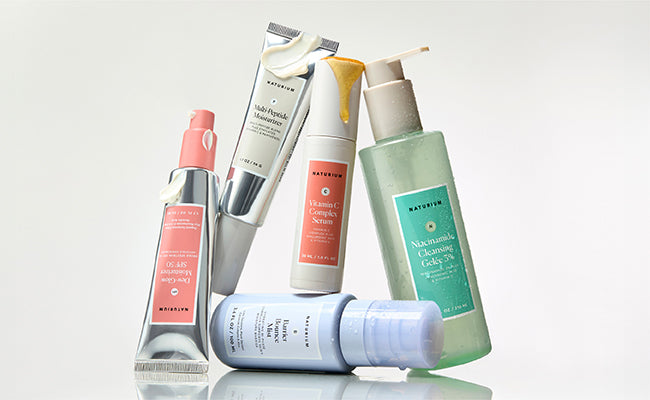
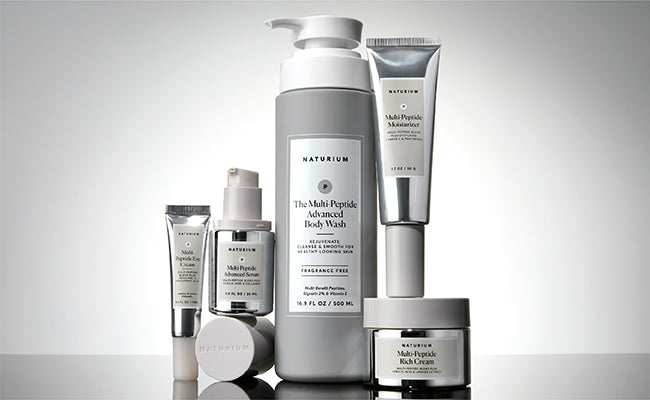
Naturium's Multi-Peptide Moisturizer brings all of this together in one nutrient-dense formula. It's formulated with a multi-peptide blend, encapsulated ethylated vitamin C, and panthenol, and it's clinically proven to visibly improve the look of fine lines and wrinkles in just 8 weeks across all skin types, including self-perceived sensitive skin.
Don't Skip SPF on Your Face
One of the most important functions a daytime face moisturizer can serve is sun protection, and this is where face and body products truly diverge. Daily SPF on your face isn't optional. UV exposure is one of the leading drivers of premature aging, hyperpigmentation, and long-term skin damage.
Naturium's Dew-Glow Moisturizer SPF 50 makes this step effortless. It delivers broad spectrum SPF 50 PA++++ protection with organic/chemical sunscreen filters that apply invisibly on all skin tones, while leaving a dewy, radiant finish. Niacinamide and ethyl ascorbic acid are included to visibly improve the complexion, and the new 1/4 teaspoon dip cap takes the guesswork out of how much to apply. Sun protection and skincare, done in one step.
What Makes a Body Moisturizer Different?
Body moisturizers are built for coverage, intensity, and efficiency. They're designed to hydrate large surface areas quickly, often using richer, more emollient formulas that would be too heavy for facial skin, but are exactly what the skin on your body needs.
Richer Formulas for Deeper Hydration
Body skin benefits from heavier occlusives and emollients that seal in moisture over time, especially on very dry skin-prone areas like elbows, knees, and legs. Common ingredients in body lotions and body creams include:
Shea butter for deep, long-lasting nourishment.
Omega fatty acids to replenish the skin barrier and restore softness.
Glycerin and sodium PCA as powerful humectants that draw in moisture.
Squalane for lightweight yet intense hydration.
Plant-based peptides to help firm skin's appearance.
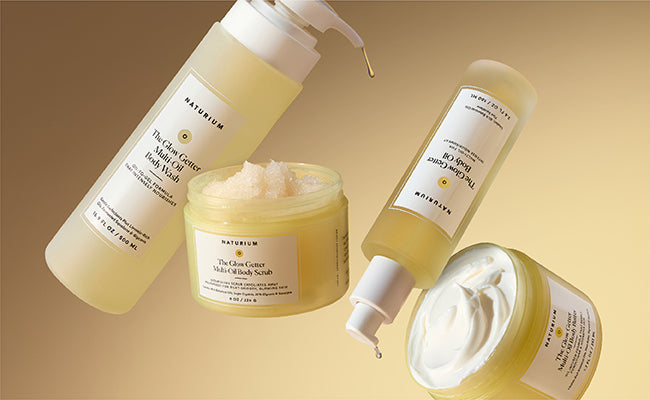
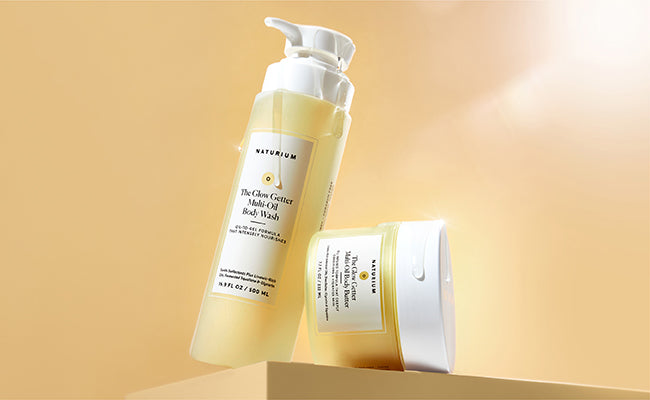
Naturium's Bio-Lipid Restoring Body Lotion is a best-selling everyday option, combining omega fatty acids, shea butter, B vitamins, and sodium PCA to leave skin feeling soft and supple. For those who want richer, more indulgent nourishment, the Glow Getter Multi-Oil Body Butter delivers an intensely moisturizing experience with a blend of botanical oils, squalane, and plant-based peptides, all wrapped in a warm vanilla and coconut scent.
Body Skin Can Benefit from Actives Too
One of the most exciting shifts in modern body care is the move toward active ingredients in body moisturizers. Rough texture, uneven tone, dead skin cells, and dullness aren't concerns exclusive to the face, and the right actives can make a visible difference from the neck down.
Naturium's Skin-Renewing Retinol Body Lotion is a standout here. Formulated with encapsulated stabilized pure retinol and skin-soothing allantoin, it works to visibly improve skin texture, tone, and firmness while minimizing the look of redness and irritation. It's developed for all skin types, making it an approachable way to bring active skincare to your full-body routine.
Choosing the Right Body Moisturizer for Your Skin Type
Dry to very dry skin: Go for a rich body butter or lipid-replenishing lotion. The Bio-Lipid Restoring Body Lotion and Glow Getter Multi-Oil Body Butter are both excellent choices.
Normal to combination skin: A lightweight body lotion that absorbs quickly without feeling heavy works well. The Bio-Lipid formula fits this profile.
Rough texture or uneven tone: The Skin-Renewing Retinol Body Lotion can help visibly transform skin over time.
Oily or acne-prone skin on the body: Look for lighter, non-comedogenic formulas that hydrate without clogging pores.
Mature skin: The Skin-Renewing Retinol Body Lotion is a great pick, as retinol helps visibly improve firmness and texture as skin ages.
Can You Use a Body Moisturizer on Your Face (or Vice Versa)?
The short answer: it's not recommended.
Using a body lotion or body cream on your face risks clogging pores, triggering breakouts, or overwhelming delicate facial skin with ingredients it doesn't need or can't tolerate. Body moisturizers simply aren't formulated with the same attention to skin sensitivity or comedogenicity that facial moisturizers are.
Going the other direction — using a face moisturizer on your body — is less likely to cause harm, but it's impractical. Face moisturizers are formulated in smaller quantities with higher concentrations of actives, making them far too expensive and insufficient in coverage for body use. You'd go through a bottle in days.
The bottom line: face and body moisturizers each do their job best when used where they're designed to be used. Keeping both in your routine isn't redundant; it's smart skincare.
How to Layer Them Into Your Skincare Routine
Getting the most out of your moisturizers is also about when and how you apply them.
Morning face routine:
-
Cleanse.
-
Apply any serums or treatments.
-
Follow with your face moisturizer (or an SPF moisturizer like the Dew-Glow Moisturizer SPF 50 to combine both steps).
Evening face routine:
-
Cleanse and apply any actives or treatments.
-
Finish with your face moisturizer to seal in hydration and support overnight skin barrier repair.
Body routine:
-
Apply body moisturizer right after a shower, while skin is still slightly damp. This helps lock in moisture more effectively.
-
Pay extra attention to drier areas like elbows, knees, and shins.
-
For best results with the Skin-Renewing Retinol Body Lotion, use in the evening as part of a consistent routine.
Naturium Moisturizers: Skincare That Works for Your Whole Body
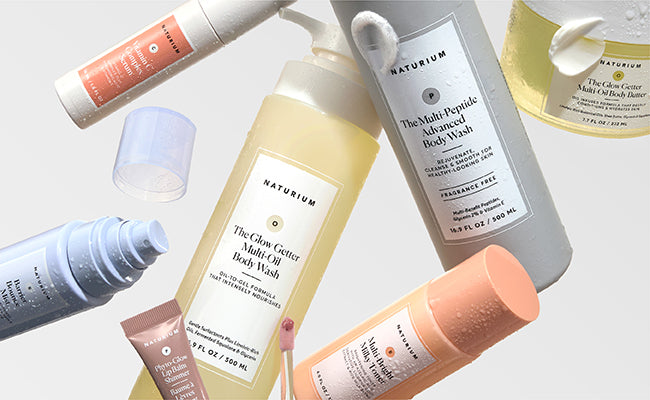
At Naturium, the philosophy is simple: effective, ingredient-forward skincare shouldn't have to be complicated or expensive. Whether you're looking for a face moisturizer that doubles as your daily SPF, a peptide-rich formula that visibly targets fine lines, a nourishing body butter for a healthy glow, or a retinol body lotion that brings active skincare to your full-body routine, there's a Naturium moisturizer formulated to meet you where your skin is. Every product is developed with real ingredients, real results, and real people of all skin types in mind.
Frequently Asked Questions
What's the main difference between a face moisturizer and a body moisturizer?
Face moisturizers are lighter, non-comedogenic, and formulated with actives suited for thinner, more sensitive facial skin. Body moisturizers are richer and designed to cover larger surface areas with more emollient, deeply hydrating ingredients.
What's the difference between facial and body skin?
Facial skin is thinner, more delicate, and more densely packed with oil glands than body skin, making it more prone to sensitivity, clogged pores, and visible signs of aging. Body skin is thicker and more resilient, but tends to dry out faster. Because of these structural differences, the two areas have distinct hydration needs and respond best to moisturizers formulated specifically for them.
Do I really need SPF in my face moisturizer?
Daily sun protection is one of the most important steps in any skincare routine. A face moisturizer with built-in SPF — like Naturium's Dew-Glow Moisturizer SPF 50 — makes it easy to never skip this step.
How often should I moisturize my face and body?
For most skin types, moisturizing face and body once or twice daily (morning and evening) is ideal. Applying body moisturizer right after a shower helps maximize absorption.


Leave a comment
This site is protected by hCaptcha and the hCaptcha Privacy Policy and Terms of Service apply.