




Why You're Probably Not Applying Enough Sunscreen — And How to Fix It

Most people think they’re using enough sunscreen, but in reality, application habits often fall short of what’s needed for proper protection. Between unclear guidelines and inconsistent routines, it’s easy to under-apply SPF and reduce its effectiveness without realizing it.
This guide breaks down how much sunscreen you actually need, how to apply it correctly, and what factors beyond SPF numbers matter for protecting your skin from sun damage and premature aging.
What Is SPF, Really?
SPF, or sun protection factor, is a lab measurement that indicates how much longer skin takes to redden from UVB rays when sunscreen is applied versus bare skin. If unprotected skin would burn in 10 minutes, SPF 30 theoretically extends that time under controlled conditions.
In practice, this varies based on factors like skin type, environment, time of year, and UV intensity. SPF measures UVB protection only, the ultraviolet rays primarily responsible for sunburn and direct damage.
Here’s how the numbers break down:
SPF 15 blocks approximately 93% of UVB radiation
SPF 30 blocks approximately 97% of UVB rays
SPF 50 blocks approximately 98% of UVB rays
SPF 100 blocks approximately 99% of UVB rays
While the percentage differences may seem small, higher SPF levels allow less UV radiation to reach the skin over time, which is especially important during extended sun exposure. No sunscreen blocks 100% of UV rays.
How Much SPF Do You Need?
For most people, a broad spectrum sunscreen with at least SPF 30 is the minimum, and SPF 50 offers additional protection for daily use on exposed areas like the face, neck, and hands. Your lifestyle determines whether you may benefit from higher protection.
By activity level:
Everyday indoor/outdoor mix (commuting, working by windows): SPF 30–50 applied generously to face, neck, ears, and hands. UVA rays can penetrate glass, so even indoor days contribute to exposure.
Extended outdoor days (beach, hiking, sports): SPF 50 or higher, preferably water resistant, with reapplication every two hours.
Higher-risk situations (photosensitive skin, post-procedure, or medical guidance): SPF 50+ with consistent reapplication.
Higher SPF can help compensate for under-application, which is common. Many people apply less than the amount used in testing, which can reduce the level of protection achieved in real-world use.
Skin tone does not change these recommendations. Melanin provides some natural protection, but not enough to prevent long-term UV damage, hyperpigmentation, or other visible skin concerns.
Exactly How Much Sunscreen to Apply (Face and Body)
SPF ratings are based on applying sunscreen at a density of 2 mg per square centimeter of skin. Most people apply far less, which is why measuring matters.
Face and neck:
Use about 1/4 teaspoon (1.2–1.5 ml) or the two-finger rule—a line of product along your index and middle finger.
Cover all exposed areas: entire face, ears, neck (front and back), hairline, and around the nose.
Full body:
Apply 1–1.5 ounces (about 30–45 ml, or a shot glass amount) for an average adult.
Don’t forget commonly missed areas like ears, hairline, hands, and feet.
Application tip:
Apply sunscreen evenly and generously at least 15 minutes before sun exposure to allow it to properly form a protective layer on the skin.
For spray sunscreens, spray into your hands first and then apply to the face. Never spray directly onto the face.
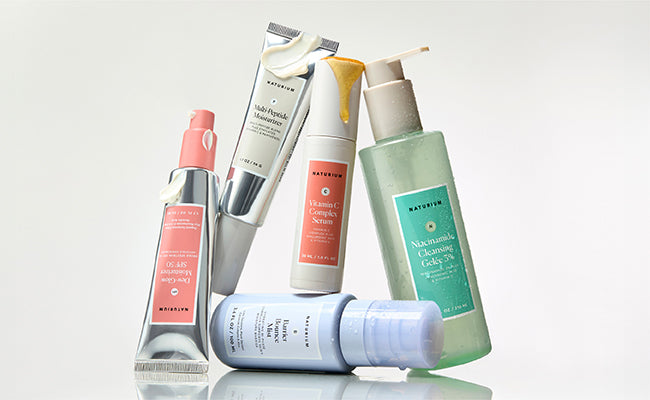
Naturium’s Dew-Glow Moisturizer SPF 50 includes an innovative dip cap to help you apply SPF more consistently.
SPF 30 vs. SPF 50 (and Beyond): Is Higher Always Better?
Dermatologists recommend at least SPF 30 for daily protection, with SPF 50 offering additional coverage, especially for extended time outdoors. Because people often apply less than recommended, SPF 50 can help provide a margin of safety in real-world use. However, higher SPF doesn't eliminate the need for proper application or reapplication.
Very high SPF levels may be useful in high-UV environments, but no sunscreen replaces the need to reapply every two hours during sun exposure. Naturium’s Dew-Glow Moisturizer SPF 50 and Dew-Glow Tinted Moisturizer SPF 50+ are formulated at this higher level to support more consistent daily protection.
Broad Spectrum, UVA Protection, and Why PA++++ Matters
SPF only describes UVB protection. UVA rays—which contribute to visible aging and long-term skin damage—require broad spectrum coverage.
UVA vs. UVB:
UVA rays: Penetrate deeper into the skin, present year-round (even through clouds and windows), and contribute to fine lines, uneven tone, and other visible changes.
UVB rays: Cause sunburn and direct skin damage, with higher intensity during peak daylight hours,
Broad spectrum sunscreen helps protect against both types. The PA rating system (PA+ through PA++++) indicates UVA protection strength, with PA++++ representing a high level of UVA defense.
What to look for:
“Broad spectrum” labeling
PA++++ where available
A texture you’ll enjoy using daily
Both Naturium Dew-Glow sunscreens offer broad spectrum SPF 50 PA++++ protection, helping support defense against both UVA and UVB exposure.
Choosing the Right Sunscreen Formula (Face vs. Body, Mineral vs. Chemical)
The best sunscreen is one you’ll apply consistently. Texture, finish, and compatibility with your skincare routine all play a role.
Face vs. body formulas:
Body sunscreens can be used on the face, but facial formulas are typically lighter and better suited for daily wear.
Sunscreen designed for the face is less likely to feel heavy or interfere with other skincare products.
Mineral vs. chemical filters:
Mineral sunscreens use zinc oxide or titanium dioxide to scatter UV rays away from the skin and may be preferred by those with sensitive skin.
Chemical sunscreens convert UV radiation into heat, often offering a more lightweight and invisible finish across skin tones.
Naturium’s Dew-Glow formulas use modern chemical filters to deliver broad spectrum protection with a dewy finish that blends easily across skin tones. If you have sensitive or acne-prone skin, consider patch testing to find the best fit for your routine.
How Often to Reapply and When SPF Still Isn’t Enough
The rule is clear: you need to reapply sunscreen every two hours when outdoors, and immediately after swimming, sweating heavily, or towel drying, regardless of SPF level. For mostly indoor days away from windows, one generous morning application may suffice. Add reapplication if you drive frequently, sit by windows, or step outside at lunch.
Water resistant sunscreen (rated 40 or 80 minutes) helps during swimming or intense exercise, but “water resistant” doesn’t mean waterproof. Reapplication schedules still apply.
Complementary protection strategies:
Seek shade between 10 a.m. and 4 p.m. when UV index peaks.
Wear sun protective clothing, wide-brimmed hats, and UV-blocking sunglasses.
Avoid tanning beds. Any tan signals skin damage, even without visible sunburn.
Wearing sunscreen is essential, but it works best as part of a layered approach to protect your skin from too much exposure.
Naturium Sunscreens: Meeting Your Daily SPF Needs
Naturium’s sunscreens are made to fit seamlessly into your routine, with no heavy, greasy feel, just lightweight, dewy protection you’ll actually want to wear. Each formula delivers broad-spectrum coverage while layering easily with the rest of your skincare.
Ingredients like niacinamide and vitamin C add a little extra glow and skin-loving benefits, because when SPF feels good on your skin, sticking with it every day becomes second nature. Explore Naturium's sunscreen products today.
Frequently Asked Questions
Do I need a different SPF level on my face than on my body?
SPF 30 is the minimum for both face and body, but SPF 50 is ideal for constantly exposed areas like face, neck, chest, and hands. You don’t technically need a higher SPF number for face versus body; the main difference is texture. Facial sunscreens like Naturium Dew-Glow Moisturizer SPF 50 are lighter and designed for daily wear under makeup.
Is SPF in my makeup enough protection on its own?
Makeup with SPF rarely provides enough protection because you’d need to apply several times your normal amount to reach the labeled SPF. A foundation claiming SPF 30 might deliver SPF 3-8 at typical application amounts. Use a dedicated broad spectrum sunscreen as your final skincare step, then apply makeup on top for supplemental coverage.
Does my skin tone change how much SPF I need?
All skin tones need at least SPF 30 daily, with SPF 50 ideal for long-term protection. Darker skin contains more melanin, which offers some natural UV protection, but not enough to prevent DNA damage, hyperpigmentation, or skin cancer. Prioritize formulas that apply invisibly to improve daily consistency.
Can I rely on high SPF instead of reapplying?
No matter the SPF rating, all sunscreens break down with time, sweat, water, and friction. A higher SPF number provides some margin for under-application but doesn’t eliminate the need to reapply every two hours outdoors. Full protection requires adequate application and consistent reapplication.
How should I fit SPF into a skincare routine with active ingredients?
Use vitamin C and antioxidants in the morning under your sunscreen. Reserve retinol or retinaldehyde for nighttime only. Daily SPF is non-negotiable when using actives that increase sun sensitivity. A simple morning sequence: cleanse, apply vitamin C serum, then finish with a full 1/4 teaspoon of broad spectrum SPF 50 like Naturium Dew-Glow Moisturizer SPF 50.


Leave a comment
This site is protected by hCaptcha and the hCaptcha Privacy Policy and Terms of Service apply.