




Mandelic Acid Vs Azelaic Acid

The Science Behind It...
Overall clinical data on a specific ingredient(s) & how they function.
Mandelic Acid Vs. Azelaic Acid - Which Is Right For You?
Understanding the difference between mandelic acid and azelaic acid can help you make better-informed decisions for your skin care routine, particularly if you are one of the many individuals with sensitive skin in search of effective, but gentle exfoliating acids. When considering mandelic vs. azelaic acid, it is important to pay special attention to your skin’s tendency towards reactivity, as well as your overall skin care goals.
What is Mandelic Acid?
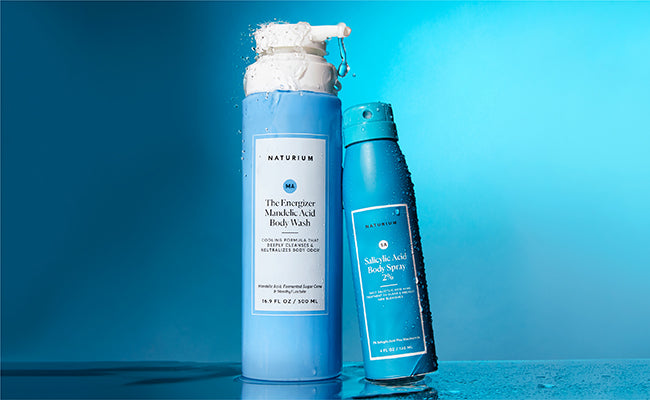
Mandelic acid is one of several well-known alpha-hydroxy acids (AHA), naturally derived from bitter almond extracts. In comparison to other AHAs, mandelic acid has a large molecular size, making it a gentle acid. It is also oil-soluble, which allows mandelic acid to effectively penetrate pores.
What are the benefits of Mandelic Acid?
Mandelic acid is generally well-tolerated by all skin types, including sensitive skin. It can be a useful addition to skin care routines for individuals requiring a gentle AHAi that can:
- Help fade visible uneven skin tone, including dark spots and discoloration
- Help contribute to a brighter, more radiant-looking complexion
- Help clear clarify pores
What is Azelaic Acid?
Azelaic acid is a dicarboxylic acid, differentiating it from alpha-hydroxy acids and beta-hydroxy acids on a molecular level. It is a naturally-derived acid sourced from barley, rye, and wheat grains.
Like mandelic acid, azelaic acid is counted among the gentler acids due to a high molecular weight.
What are the benefits of Azelaic Acid?
Azelaic acid is suitable for all skin types, including mildly sensitive and acne-prone skin. Unlike some other acids, azelaic acid does not have a marked impact on oil production, so it can be a good option for individuals with dry skin. Individuals with extremely sensitive skin, azelaic acid may be mildly irritating.ii
Azelaic acid can be an ideal match for those seeking an acid that can:
- Help improve the appearance of dark spots and uneven skin tone
- Enhancing the look and feel of your skin: soft, smooth skin texture and anoverall glow
- Helps clear skin congestion without disrupting sensitive skin
- Achieving a more even skin-tone
Is Mandelic Acid or Azelaic Acid Better for Uneven Skin Tone?
So, which is better for hyperpigmentation: mandelic acid or azelaic acid? Both of these acids can serve as gentle, yet effective ingredients for reducing the appearance of hyperpigmentation. In order to choose the best acid for hyperpigmentation, dark spots, and scarring, you may want to consider trying both options to determine which best suits your expectations.
For individuals that experience redness, sensitivity, or stinging when using azelaic acid, mandelic acid can often be a good alternative.

ihttps://nucelle.com/wp-content/uploads/2019/12/MandelicAcid-Efficacy.pdf
iihttps://pmc.ncbi.nlm.nih.gov/articles/PMC10809820/
DISCLAIMER: Lab Journals are intended to help educate on specific ingredients and skin care topics. Our articles are written to be informative and informational.
Please note any Naturium products with referenced ingredients are formulated for Cosmetic Use Only and NOT intended as replacements for physician pharmaceutical product recommendations.


%20%26amp;%20how%20they%20function.%0A%0A%0A%0A%0A%0A%0AMandelic%20Acid%20Vs.%20Azelaic%20Acid%20-%20Which%20Is%20Right%20For%20You?%0AUnderstanding%20the%20difference%20be...)
Leave a comment
This site is protected by hCaptcha and the hCaptcha Privacy Policy and Terms of Service apply.