




Peptides vs Retinol: What’s the Difference and Can You Use Them Together?

Discover peptides and retinol benefits, how they differ, and the best way to layer them together for smoother, firmer, more youthful-looking skin.
Peptides vs Retinol: What’s the Difference and Can You Use Them Together?
Peptides and retinol are both skincare actives commonly used to address visible signs of aging, including fine lines, wrinkles, and uneven texture, but they are different types of ingredients with different levels of research behind them.
Retinol is a vitamin A derivative and a type of retinoid. It has an established history of use in skincare for improving the appearance of fine lines, wrinkles, uneven tone, and texture.
Peptides are short chains of amino acids used in skincare formulas to support a smoother, firmer, and more youthful-looking appearance.
So, when comparing peptides vs retinol, you do not necessarily have to choose one. Peptides and retinol can be used together, including in routines for aging skin or mature skin. The right approach depends on your skin, the formulas you use, and your goals.
Key Takeaways
- Peptides and retinol are different skincare actives. Peptides are short chains of amino acids, while retinol is a vitamin A derivative and type of retinoid.
- Both can help address visible signs of aging. Peptides can help skin look smoother and firmer, while retinol can help improve the appearance of fine lines, wrinkles, tone, and texture.
- Retinoids have the stronger evidence for wrinkles. Research on topical peptides is also promising but more limited.
- Peptides are generally well tolerated. Retinol is more likely to cause dryness or irritation and may need to be introduced gradually.
- You can use peptides and retinol together. They can be layered in the same routine when the formulas are compatible and your skin tolerates them.
What Are Peptides in Skincare?
Peptides are short chains of amino acids that can act like messengers in the skin. Depending on the type, they may signal processes involved in collagen production or help deliver materials the skin uses to maintain and repair itself. Copper peptides, for example, carry copper, a mineral involved in collagen formation.
That’s why peptide skincare is commonly used to help improve the look of fine lines, texture, and firmness. Research on topical peptides is promising but still developing, and how well they work can also depend on how they’re formulated and delivered into the skin.
For more on adding multiple peptides to your routine, read Naturium’s How to Build a Complete Multi-Peptide Skincare Routine.
What Is Retinol in Skincare?
Retinol is a vitamin A derivative that helps support skin cell turnover and processes involved in collagen production. That’s why it’s commonly used to improve the appearance of fine lines and wrinkles, uneven skin tone, and texture.
Retinol belongs to a larger family of vitamin A ingredients called retinoids, which also includes retinaldehyde (retinal). Different retinoids can vary in strength, stability, and how well skin tolerates them. Because retinol can cause irritation, it’s generally recommended to be introduced gradually.
Learn more in Naturium’s Retinol Serum 101.
Follow up with Everything You Need to Know About Retinaldehyde.
Peptides vs Retinol: Key Differences at a Glance
When comparing peptides vs retinol for aging skin concerns, the biggest difference is not simply which ingredient is “stronger.” They are different skincare actives with different properties, research, and tolerability profiles.
| Peptides | Retinol | |
|---|---|---|
| What they are | Short chains of amino acids | Vitamin A derivative and retinoid |
| Common cosmetic benefits | Helps skin look smoother and firmer; helps reduce the appearance of fine lines | Helps improve the appearance of fine lines, wrinkles, tone, and texture |
| Research | Promising, but topical evidence remains limited | Larger established evidence base |
| Tolerability | Generally well tolerated | Can cause dryness and irritation, particularly when first introduced |
| Use | AM and/or PM depending on formula | Typically introduced gradually; follow product directions |
| Can they be combined? | Yes | Yes |
How They Work Differently
Peptides and retinol can both support smoother, firmer-looking skin, but they take different approaches. Peptides act like messengers, helping support the processes skin uses to maintain and repair itself. Retinol is a form of vitamin A that encourages skin cell turnover and supports collagen production.
In simple terms, peptides help support what skin needs to do its job, while retinol helps encourage renewal.
Irritation & Adjustment Period
Tolerability is one of the clearest differences between peptides and retinol.
Peptides are generally considered well tolerated. In the 2026 systematic review of peptide studies, adverse events were minimal, but you should always consult a dermatologist if you have any concerns.
Retinoids have a greater potential to cause dryness and irritation. The American Academy of Dermatology recommends starting with a less intense retinoid formula and introducing it slowly rather than immediately using it every night.
Best For: Who Should Choose Each
- Consider peptides if your goal is to help skin look smoother, firmer, and more hydrated, particularly if you prefer a skincare active that can fit easily into a daily routine.
- Consider retinol if fine lines, wrinkles, uneven-looking tone, or texture are primary concerns and you are comfortable introducing a retinoid gradually.
- Consider both if you want to address multiple visible signs of aging and your skin tolerates the formulas.
Choosing Between Peptides, Retinol, or Both: A Decision Guide
There is no universal answer to whether peptides or retinol are better for your skin.
For someone new to skincare ingredients for fine lines and wrinkles, peptides may offer a simple starting point. They can also be incorporated into routines for skin that does not tolerate retinol well.
For someone specifically prioritizing visible fine lines and wrinkles, retinoids have the stronger body of evidence. A recent review of cosmetic retinoids found evidence supporting retinol and retinaldehyde for improving visible signs of photoaging.
Using retinol along with peptides is another option. Rather than asking which ingredient should replace the other, consider how each can fit into your overall routine.
Can You Use Peptides and Retinol Together?
Yes. You can use peptides with retinol, provided the individual formulas are designed to work within the same routine and your skin tolerates them.
Naturium specifically confirms that its Multi-Peptide Advanced Serum can be layered with Retinol Complex Serum or Retinaldehyde Cream Serums. As with any new combination of skincare actives, patch test first and introduce products based on your skin’s tolerance.
Why Naturium’s Biocompatible Formulas Layer Together
Peptide delivery can present a formulation challenge because the properties of peptides can make penetration through the skin barrier difficult. Researchers continue to study delivery technologies designed to improve the stability and delivery of topical peptides.
Naturium’s peptide and retinol products use biocompatible delivery systems and encapsulation technology and are designed to be layered together. Multi-Peptide Advanced Serum, for example, contains encapsulated copper peptides alongside Argireline Amplified Peptide, ferulic acid, and hydrolyzed collagen. Retinol Complex Serum uses encapsulated retinol alongside bakuchiol and squalane.
How to Layer: Peptides or Retinol First?
Should you use peptides or retinol first? Follow the directions for the specific products you are using rather than relying on a universal ingredient rule.
For a Naturium routine using Multi-Peptide Advanced Serum and Retinol Complex Serum, apply the serum according to product directions and follow with your retinol product. You can also alternate products if your skin prefers a simpler routine.
Peptides vs Retinol for Wrinkles, Firmness & Visible Signs of Aging
Both ingredient categories are used in products designed for aging skin and mature skin, but their evidence is not equal.
Retinoids have been studied extensively for visible signs of photoaging. Topical peptides also have research behind them, but a 2026 systematic review found that evidence specifically supporting topical peptides remains limited and called for larger, standardized trials.
Which Is Better for Wrinkles?
If you’re asking which is better for wrinkles, peptides or retinol, retinoids currently have the stronger overall body of evidence.
That does not mean peptides have no place in a routine for fine lines and wrinkles. Peptide formulas may help improve the appearance of fine lines and support smoother, firmer-looking skin.
Peptides, Retinol & Collagen: How They Compare
Collagen is one of the proteins that helps give skin its firm, supported structure. Both peptides and retinol are studied in relation to collagen, but they interact with those processes differently.
Certain peptides may act as signals involved in collagen-related activity, while retinoids influence pathways tied to collagen production and breakdown. In skincare, the more useful takeaway is the visible result: both ingredients may help improve the look of firmness, fine lines, and texture over time.
How to Build a Routine With Both Peptides and Retinol
If your skin tolerates both ingredients, peptides and retinol can be incorporated into the same routine or used at different times.
AM Routine: Peptides + SPF
A simple morning routine can include:
- Cleanser
- Multi-Peptide Advanced Serum
- Moisturizer
- Broad-spectrum sunscreen
Sunscreen is particularly important in any skincare routine focused on visible signs of aging and when using retinoids.
PM Routine: Retinol + Peptides
At night, a routine could include:
- Cleanser
- Multi-Peptide Advanced Serum
- Retinol Complex Serum or Retinaldehyde Cream Serum
- Moisturizer
You do not need to use every skincare active every night. If layering is uncomfortable, alternate peptide and retinoid products on different nights.
Visible results take time. With consistent use, allow approximately 6 to 12 weeks to assess your routine. Individual results vary.
Body Care Routine: Peptides + Retinol
Peptides and retinol are not limited to facial skincare.
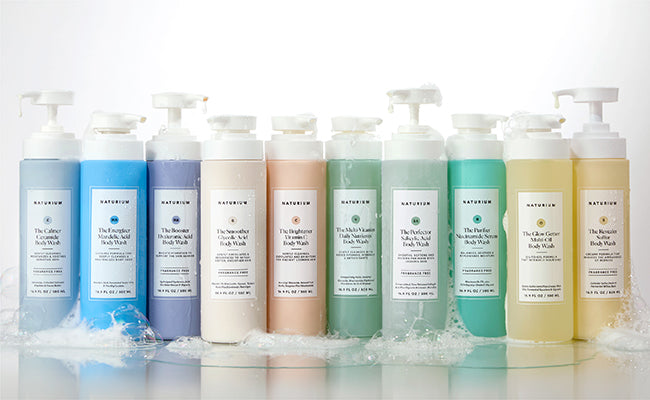
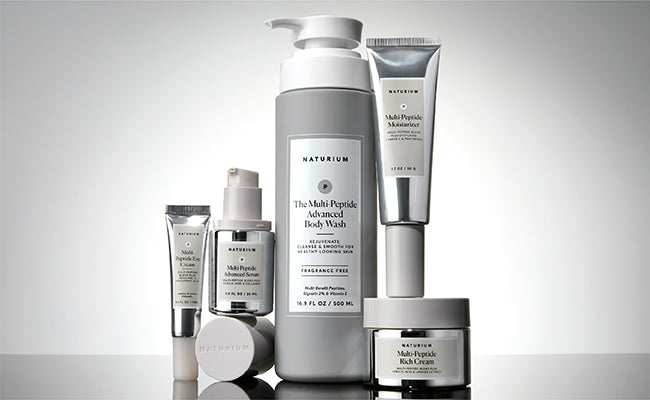
Multi-Peptide Advanced Body Wash contains a peptide complex with palmitoyl dipeptide-12, rice amino acids, ferulic acid, and vitamin E to cleanse while helping skin feel smooth and soft.
Follow with Skin-Renewing Retinol Body Lotion, formulated with encapsulated retinol, linoleic acid, phospholipids, phytosterols, sodium hyaluronate, and sodium PCA. It helps improve the appearance of uneven skin texture and supports firmer-looking skin.
Vogue has also included Naturium Skin-Renewing Retinol Body Lotion among its recommended retinol body lotions.
Shop Naturium Picks: Peptide & Retinol Heroes
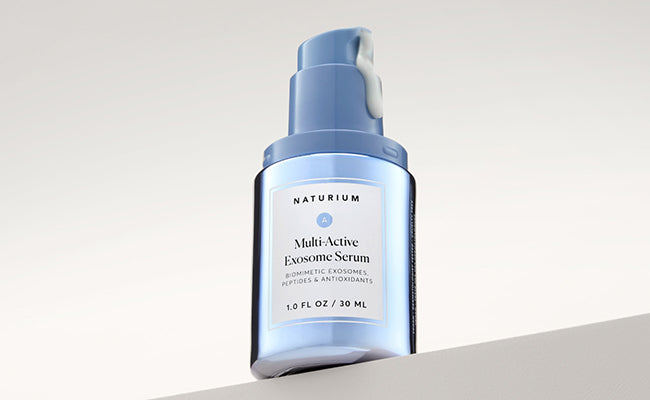
Multi-Peptide Advanced Serum
A peptide serum featuring encapsulated copper peptides, Argireline Amplified Peptide, ferulic acid, and hydrolyzed collagen. It helps visibly improve texture and reduce the look of fine lines.
Shop Multi-Peptide Advanced Serum

Retinol Complex Serum
Formulated with encapsulated retinol, bio-retinol, bakuchiol, and squalane to help improve the appearance of fine lines, tone, and texture.
Shop Retinol Complex Serum

Retinaldehyde Cream Serum 0.05%
A sustained-release retinaldehyde formula with biofermented oligopeptide. Allure has also selected Naturium’s 0.05% formula as a beginner-friendly retinal serum.
Shop Retinaldehyde Cream Serum 0.05%

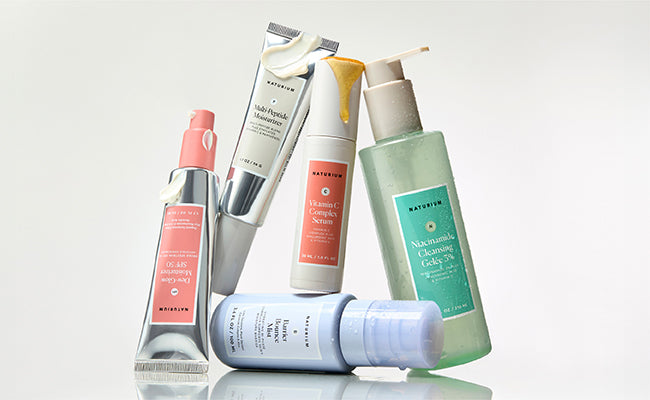
Multi-Peptide Moisturizer
Contains palmitoyl tripeptide-5, palmitoyl tripeptide-1, and palmitoyl tetrapeptide-7 alongside niacinamide, jojoba oil, and squalane to help visibly smooth fine lines and support firmer-looking skin.
Shop Multi-Peptide Moisturizer
Peptides vs Retinol FAQs
Can you use peptides and retinol together?
Yes. Peptides and retinol can be used together. Naturium’s Multi-Peptide Advanced Serum can be layered with Retinol Complex Serum or Retinaldehyde Cream Serums. Patch test first, particularly when introducing a new retinoid.
Should you apply peptides before or after retinol?
Follow the directions for your specific formulas. In a Naturium routine, Multi-Peptide Advanced Serum can be applied before Retinol Complex Serum or a Retinaldehyde Cream Serum. If your skin becomes uncomfortable, try alternating the products instead.
Is retinol a peptide?
No. Retinol is not a peptide. Retinol is a vitamin A derivative and a type of retinoid. Peptides are short chains of amino acids.
Which is better for wrinkles, peptides or retinol?
Retinoids currently have a stronger body of evidence for improving the appearance of wrinkles. Topical peptides are promising, but the research base is more limited. You also do not necessarily need to choose one: peptides and retinol can be incorporated into the same skincare routine.

iRetinoid or retinol? Tips for when to use these skin care powerhouses — American Academy of Dermatology Association (May 25, 2021) — https://www.aad.org/public/everyday-care/skin-care-secrets/anti-aging/retinoid-retinol
iiPeptides for Skin Care: Are They Worth It? — Cleveland Clinic (July 31, 2024) — https://health.clevelandclinic.org/peptides-for-skin
iiiWhat Is Retinol — Cleveland Clinic (June 17, 2022) — https://my.clevelandclinic.org/health/treatments/23293-retinol
ivNukaly HY, Halawani IR, Irtaza HM, et al. Oral and topical peptides for skin aging: systematic review and meta-analysis of randomized controlled trials. Front Med (Lausanne). March 17, 2026;13:1618306. doi: 10.3389/fmed.2026.1618306. — https://pmc.ncbi.nlm.nih.gov/articles/PMC13037056/
vMambwe B, Mellody KT, Kiss O, et al. Cosmetic retinoid use in photoaged skin: A review of the compounds, their use and mechanisms of action. Int J Cosmet Sci. February 2025;47(1):45-57. doi: 10.1111/ics.13013. — https://pmc.ncbi.nlm.nih.gov/articles/PMC11788006/
viPintea A, Manea A, Pintea C, et al. Peptides: Emerging Candidates for the Prevention and Treatment of Skin Senescence: A Review. Biomolecules. January 09, 2025;15(1):88. doi: 10.3390/biom15010088. — https://pmc.ncbi.nlm.nih.gov/articles/PMC11762834/
viiThe Best Retinol Body Lotion Is Here to Transform Skin Below the Neck — By Deanna Pai, Vogue (June 29, 2026) — https://www.vogue.com/article/best-retinol-body-lotion
viii9 Best Retinal Serums and Creams to Level Up Your Retinoid Routine — By Christa Joanna Lee, Allure (July 16, 2026) — https://www.allure.com/story/retinal-products
DISCLAIMER: Lab Journals are intended to help educate on specific ingredients and skin care topics. Our articles are written to be informative and informational.
Please note any Naturium products with referenced ingredients are formulated for Cosmetic Use Only and NOT intended as replacements for physician pharmaceutical product recommendations.


Leave a comment
This site is protected by hCaptcha and the hCaptcha Privacy Policy and Terms of Service apply.