




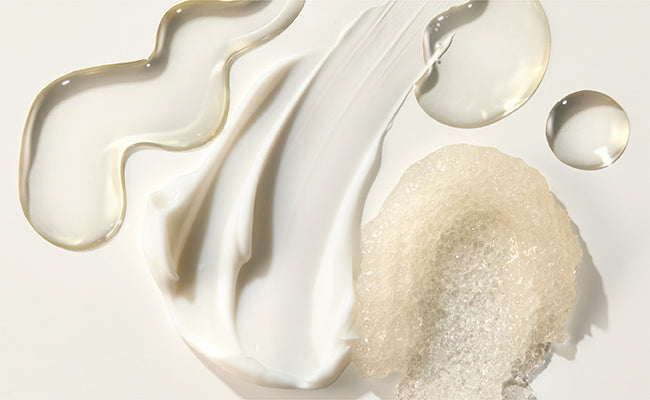
What Are Lipids in Skin Care and Body Care? A Complete Guide to Skin Barrier Lipids

Author: Amber Smith
You’ve probably heard a lot about protecting your skin barrier lately. But what is that barrier actually made of? This is where lipids come in.
Key Takeaways
- Lipids are a natural part of your skin barrier. Ceramides, cholesterol, and free fatty acids are the three primary lipids in the skin’s outermost layer.
- Skin barrier lipids help keep moisture in. They form an organized matrix between skin cells that helps limit water loss.
- Lipids can be found throughout your routine. Cleansers, serums, moisturizers, body washes, and body lotions can all be formulated with lipid ingredients.
- Choose lipid skincare based on what your skin needs. Dry skin may benefit from richer lipid formulas, while dehydrated skin may benefit from lipids paired with humectants like glycerin or urea.
What Are Lipids?
Lipids are naturally occurring fats and fat-like substances found throughout the skin. Research identifies ceramides, cholesterol, and free fatty acids as the three main types of lipids.
These skin barrier lipids are organized around skin cells, helping create a protective barrier that keeps moisture in and the outside world out. Without them, water would escape from the skin much more easily.
So, what are lipids in skincare? Think of lipids as part of the foundation of a healthy skin barrier: your skin cells are the bricks, and lipids are the mortar between them.
And yes, words like fatty acids and cholesterol may sound more at home on a nutrition label than in your skincare routine. But they’re naturally present in your skin, and adding topical lipids doesn’t mean adding grease. They can be formulated into everything from lightweight serums to rich creams.
The Types of Lipids in Skincare
Not all lipids play the same role. Ceramides, cholesterol, and free fatty acids make up the skin barrier’s core lipid trio, while other lipids used in skincare, including squalane and plant-derived lipids, can provide additional moisturizing benefits.
Here’s what each one does.
Ceramides
Ceramides are a diverse family of lipids and make up the largest proportion of lipids in the skin’s outermost layer. One scientific review estimates the matrix at approximately 50% ceramides, 25% cholesterol, and 15% free fatty acids, with very little else.
In skincare, ceramides can help moisturize and support the look of a healthy skin barrier, making them a popular ingredient in moisturizers for dry skin.
Cholesterol
Yes, there’s cholesterol in your skin, and in this context, that’s a good thing as it’s another major component of the skin’s outermost layer. Research into model skin membranes has shown that cholesterol plays an important role in how those lipids are organized.
Free Fatty Acids
Free fatty acids are the third major member of the skin barrier’s lipid trio.
Despite the name, fatty acids aren’t synonymous with animal fat or greasy texture. They’re a broad class of lipid molecules naturally found in your skin. Different fatty acids have different properties, and research suggests their composition helps influence how the skin’s lipids are organized.
Squalane, Phospholipids & Other Lipid Oils
CERs, CHOL, and FFAs aren’t the only ingredients that qualify as lipids.
Squalane is a lightweight emollient that helps soften skin and protect against moisture loss, while plant-derived oils and phyto-lipids can provide fatty acids and other moisturizing lipids.
Phospholipids in skincare are another type of lipid used in cosmetic formulations.
| Lipid | Where You May See It | How It Can Help |
|---|---|---|
| Ceramides | Serums, creams, body washes | Help moisturize and support the look of a healthy skin barrier |
| Cholesterol | Barrier-focused serums and moisturizers | Often paired with ceramides and fatty acids |
| Free fatty acids | Serums, creams, plant oils | Help nourish and moisturize skin |
| Squalane | Serums, moisturizers, body washes and oils | Lightweight emollient that helps soften skin and protect against moisture loss |
| Phospholipids | Various cosmetic formulations | Versatile lipids used in some skincare delivery systems and formulations |
| Plant oils/phyto-lipids | Cleansers, moisturizers, body care | Help replenish moisture and leave skin soft and nourished |
What Do Lipids Do for the Skin and Skin Barrier?
Quite a lot. The lipid matrix is highly organized, and because it forms a continuous pathway through the skin’s outermost layer, researchers consider it an important contributor to skin barrier function.
From a skincare perspective, that makes lipid ingredients particularly useful when your goal is skin that looks hydrated, plump, smooth, and nourished.
1. Lipids Help Support a Healthy-Looking Skin Barrier
Your skin barrier is your outermost line of defense, and lipids are a major part of it. Ceramides, cholesterol, and free fatty acids are organized into layers between the cells of the stratum corneum.
Using lipid barrier skincare can help moisturize skin and support the look of a healthy skin barrier, particularly when dryness leaves your skin feeling tight or uncomfortable.
2. Support Hydration & Moisture Retention
Here’s an important distinction: hydration isn’t only about adding moisture. Keeping it there matters, too.
One of the skin barrier’s most important roles is limiting water loss from the skin. Scientists commonly evaluate this using transepidermal water loss, or TEWL. Research has found that changes in the composition and organization of lipids can correspond with changes in TEWL and barrier permeability.
That relationship between transepidermal water loss and lipids helps explain why lipid-rich skincare is so appealing for dry-feeling skin: cosmetic lipid ingredients can help protect against moisture loss so skin feels softer and more comfortable overall.
3. Help Skin Feel Soft, Smooth & Nourished
And lipids aren’t just for your face. The rest of your body has a skin barrier, too, which is why moisturizing lipids can be just as useful in your body wash and lotion as they are in your facial serum or cream.
Why Lipid Balance Matters: Ceramides, Cholesterol & Fatty Acids Dream Team
Ceramides tend to be the celebrity of the lipid world, but focusing on ceramides alone misses part of the story.
The stratum corneum naturally contains ceramides, cholesterol, and free fatty acids together. Researchers estimate their molar ratio at approximately 1:1:1i, despite their differing percentages by weight.
That makes multi-lipid formulas a helpful approach to skincare. Rather than thinking about one “hero” lipid, look for formulas combining ceramides with complementary lipids such as cholesterol and fatty acids.
Could Your Skin Benefit From More Lipids? Dry vs. Dehydrated vs. Sensitive Skin
Dry, dehydrated, and sensitive-feeling skin have different needs.
- Dry skin tends to lack oil and may feel rough, flaky, or tight.
- Dehydrated skin lacks water and can happen to any skin type, even oily skin.
- Sensitive-feeling skin may be more prone to discomfort or visible redness.
Lipid-rich skincare can be especially appealing for dry-feeling skin, while dehydrated skin may benefit from formulas pairing lipids with humectants such as glycerin or urea. If your skin feels sensitive or uncomfortable, keep your routine simple and introduce new products one at a time.
Consider lipid-rich skincare if your skin frequently feels dry, tight, rough, flaky, or uncomfortable; feels dry after cleansing; or seems to lose hydration quickly.
Persistent or worsening redness, burning, itching, pain, cracking, or significant irritation is a reason to check in with a dermatologist.
How to Add Lipids Into Your Skincare Routine
You don’t need an entirely new routine to use lipids. A simple lipid-focused facial routine might look like:
- Cleanse
- Lipid Serum
- Lipid Moisturizer
- SPF
You also don’t need lipids at every step. Consistency matters more than piling on products, and if your skin feels sensitive or uncomfortable, introduce new formulas one at a time so you can see how your skin responds.
Lipids in Cleansers vs. Serums vs. Moisturizers
You can find lipids at almost every step, so choose based on what you want it to do.
- Choose a lipid cleanser if your skin tends to feel dry or tight after washing.
- Choose a lipid serum if you want lightweight hydration or an easy way to add lipids without the richness of a cream.
- Choose a lipid moisturizer if dryness and moisture loss are your biggest concerns or you prefer a richer final layer.
You don’t necessarily need all three. Choose the option or combination that suits your skin and routine best.
Shop Naturium Picks for Every Skin Hydration Need From Head to Toe
Lipids aren’t only for your face. Here’s how to incorporate them throughout your skincare and body-care routine.
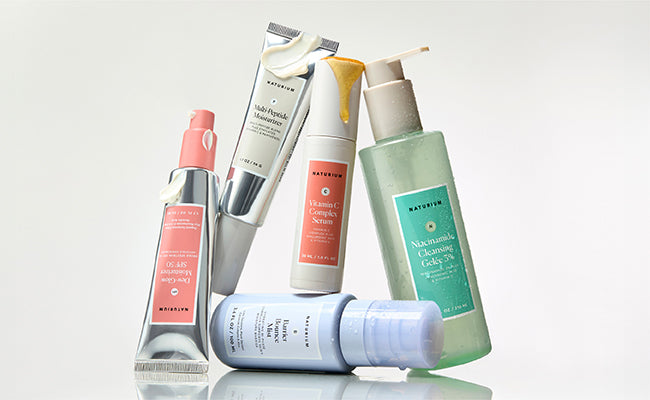
For a multi-lipid face serum: Barrier Bounce Serum
Formulated with 5% squalane, 2% urea, a ceramide complex featuring Ceramide NP, cholesterol, oleic acid, and phytosphingosine, this hydrating serum helps support the look of a healthy skin barrier while leaving skin visibly plump and dewy.

For a rich face moisturizer: Plant Ceramide Rich Moisture Cream
This ceramide moisturizer combines plant-derived ceramides with shea butter, caprylic and capric triglycerides, and plant-derived squalane to help intensely hydrate and condition dry skin. It’s an especially good pick when you want a richer cream that leaves skin feeling soft and supple.

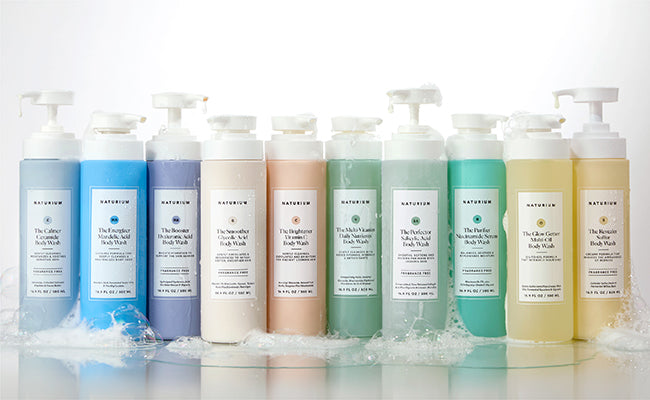
For dry, sensitive-feeling skin: The Calmer Ceramide Body Wash
Bring the ceramide-cholesterol-fatty-acid story below the neck with a body wash formulated with Ceramides NP, AP, and EOP, vegetable-derived cholesterol, free fatty acids, phytosphingosine, and colloidal oatmeal. It gently cleanses while helping dry, sensitive-feeling skin feel comfortable and supported.

For soft, supple-feeling body skin: Bio-Lipid Restoring Body Lotion
This moisturizing body lotion combines omega fatty acids, shea butter, B vitamins, and sodium PCA to help replenish moisture and support the look of a healthy skin barrier.

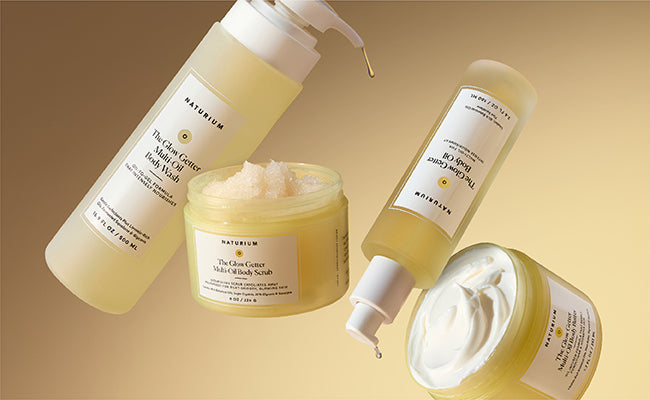
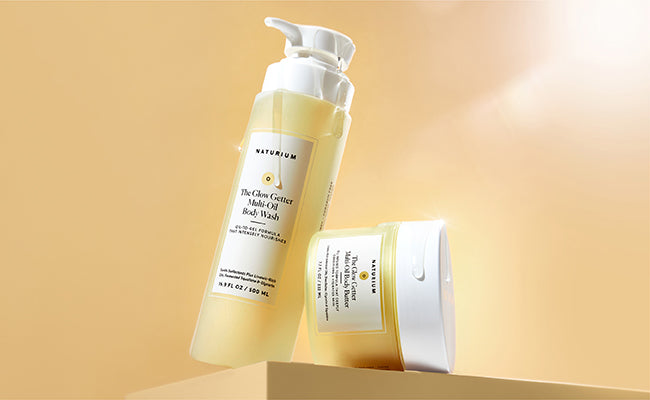
For an oil-rich cleanse: The Glow Getter Multi-Oil Hydrating Body Wash
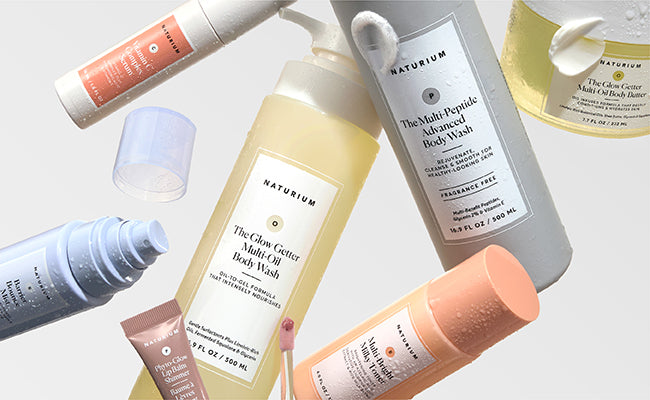
Formulated with 50% glycerin plus squalane, phyto-lipids, and linoleic-rich oils including jojoba, rosehip, and sea buckthorn, this hydrating body wash cleanses without leaving skin feeling stripped. Naturium also uses linoleic-rich oils and squalane throughout its Glow Getter collection to help moisturize and nourish skin.

The bottom line on skin barrier lipids explained? You don’t need to memorize lipid chemistry to benefit from it. Ceramides, cholesterol, and free fatty acids naturally coexist in the outermost layer of skin, while skincare ingredients such as squalane and plant oils can provide additional moisturizing benefits.
Whether you’re dealing with dry skin, changing up your routine for the season, or simply want to keep skin looking hydrated and healthy, incorporating lipid-rich formulas from cleanser to moisturizer is an easy way to help nourish skin and support the look of a healthy skin barrier.

iBouwstra JA, Nădăban A, Bras W, McCabe C, Bunge A, Gooris GS. The skin barrier: An extraordinary interface with an exceptional lipid organization. Prog Lipid Res. 2023 Nov;92:101252. doi: 10.1016/j.plipres.2023.101252. Epub 2023 Sep 4. PMID: 37666282; PMCID: PMC10841493. https://pmc.ncbi.nlm.nih.gov/articles/PMC10841493
iiFeingold KR, Elias PM. The role of ceramides in the disruption of the cutaneous permeability barrier, a common manifestation of skin disorders. J Lipid Res. 2024 Aug;65(8):100593. doi: 10.1016/j.jlr.2024.100593. Epub 2024 Jul 11. PMID: 39002948; PMCID: PMC11348431. https://pmc.ncbi.nlm.nih.gov/articles/PMC11348431
DISCLAIMER: Lab Journals are intended to help educate on specific ingredients and skin care topics. Our articles are written to be informative and informational.
Please note any Naturium products with referenced ingredients are formulated for Cosmetic Use Only and NOT intended as replacements for physician pharmaceutical product recommendations.


Leave a comment
This site is protected by hCaptcha and the hCaptcha Privacy Policy and Terms of Service apply.