




Mandelic Acid Vs Salicylic Acid

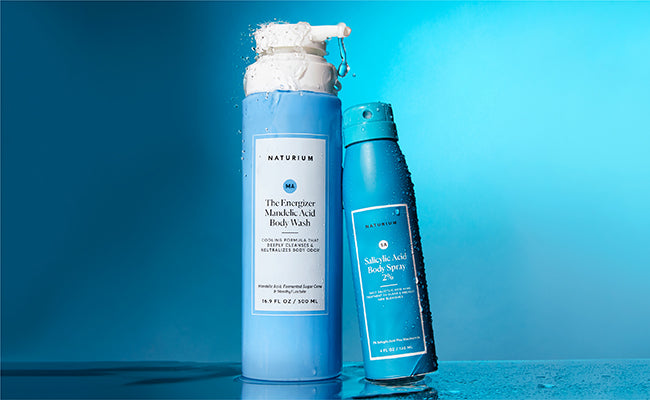
Both mandelic acid and salicylic acid can be effective options for acne-prone skin, yet each works in a distinct way that may make it better suited to your specific skin type and concerns.
Mandelic Acid Vs Salicylic Acid - Which Is Right For Your Skin?
When comparing mandelic acid vs. salicylic acid, it is important to consider your skin care needs, goals, and type.
Both mandelic acid and salicylic acid can help soothe skin, help with the look of excess oil, and contribute to an overall brighter-looking complexion. However, some individuals may experience more optimal results with salicylic acid vs. mandelic acid (or vice versa).
It is possible to safely use mandelic acid and salicylic acid together, though you may find that using just one or the other effectively suits your needs.
What is Mandelic Acid?
Mandelic acid is an alpha-hydroxy acid (AHA) made using bitter almond extracts. Because mandelic acid molecules are larger than other widely-used AHAs, such as lactic or glycolic acid, it penetrates the skin in a slower manner, making it a gentler acid.
What Skin Type is Mandelic Acid Best For?
Mandelic acid is suitable for all skin types, including sensitive skin. It may be a good option for individuals in search of a gentle, chemically exfoliating acid.
Key benefits of mandelic acid:
-
Helps smooth the look of skin's texture
-
Help minimize the visible sings of uneven skin tone and dark spots
-
Assists in reducing clogged pores and breakouts
- Helps create a more radiant, even look to the skin
What is Salicylic Acid?
Salicylic acid is a beta-hydroxy acid (BHA) derived from willow bark and is widely considered among the preferred acids for clarifying congestion and reducing breakouts. Because it is an oil-soluble acid, salicylic acid can penetrate into the pores.
What Skin Type is Salicylic Acid Best For?
Salicylic acid can be an ideal choice for individuals with oil, acne-prone skin. Because salicylic acid can contribute to control the look of excess oil, it may not be the right fit for individuals with already-dry skin.
Key Benefits of Salicylic Acid:
-
Helps clarify pores for those with acne-prone skin
-
Helps control the look of excess oil
-
Helps exfoliate the skin to enhance overall brightness
-
Helps reduce the appearance of visibly-enlarged pores
Is Mandelic Acid or Salicylic Acid Better Acne-Prone Skin
In terms of the question, “Which is better for acne; salicylic acid or mandelic acid?”, the answer is one that largely comes down to your skin care goals and needs.
Research has suggested that both mandelic acid and salicylic acid can be highly effective acids for supporting an anti-acne skin care regimen; however, each one may be better suited to a specific type of acne. Because salicylic acid is oil-soluble and helps decongest the look of pores, it can be beneficial for minimizing the appearance of blemishes such as blackheads and whiteheads. In contrast, mandelic acid’s gentler profile and ability to help support the skin barrier may make it well-suited for those with blemish-prone skin that is prone to redness and visible irritation.

DISCLAIMER: Lab Journals are intended to help educate on specific ingredients and skin care topics. Our articles are written to be informative and informational.
Please note any Naturium products with referenced ingredients are formulated for Cosmetic Use Only and NOT intended as replacements for physician pharmaceutical product recommendations.


Leave a comment
This site is protected by hCaptcha and the hCaptcha Privacy Policy and Terms of Service apply.