




Vitamin C Serum for Dull Skin

Searching for the best vitamin C serum? Learn how vitamin C helps dull-looking skin, what form to choose, and how to use it effectively.
Vitamin C Serum for Dull Skin: How to Help Bring Back Your Radiant Skin
When your skin is looking a little dull, vitamin C is one of the most researched ingredients you can add to your routine. As a potent antioxidant, vitamin C helps defend against free radicals generated by environmental stressors such as UV exposure and pollution. Research analyzed by Harvard Health also supports its use for improving the visible appearance of skin tone and texture over time.
The buzz in the beauty community is real. Naturium Vitamin C Complex Serum was named “Best for Dull Skin” by Harper’s Bazaar UK, while The New York Times Wirecutter testers praised its smooth, non-sticky feel.
So, if you’re searching for the best vitamin C serum for dull skin, here’s what vitamin C can realistically do, which form to choose, and how to make it work in your routine.
Key Takeaways: Vitamin C Serum for Dull Skin
- Vitamin C can help brighten the look of dull skin. As an antioxidant, research shows it also helps defend skin against environmental stressors associated with free-radical damage.
- Dull skin can have more than one cause. Dryness, dehydration, surface buildup, uneven skin tone, and environmental exposure can all contribute to a tired-looking complexion.
- Not all vitamin C is the same. L-ascorbic acid is the most extensively studied form, but it can be unstable and challenging to formulate. Vitamin C derivatives offer other approaches to stability and tolerability.
- Consistency matters more than overnight results. Visible changes from topical vitamin C generally build with regular use and Harvard Health notes it may take up to three months to notice improvement.
- Keep your routine simple: cleanse, apply vitamin C serum, moisturize, then SPF is an easy vitamin C serum morning routine.
What Causes Dull-Looking Skin?
First, what does dull skin look like? Think less radiant than usual: skin that looks flat, tired, rough, dry, or uneven rather than smooth and luminous.
And “dull skin” isn’t a skin type or one specific condition. Research suggests that hydration, dead or dry skin accumulation, uneven pigmentation, skin texture, and the way light reflects from the skin’s surface can all influence radiance. In other words, tired-looking skin may need more than simply adding a brightening ingredient. Hydration, moisturization, gentle exfoliation, and daily sun protection can all play a role depending on what’s behind the dullness.
Environmental exposure is particularly relevant to vitamin C. Harvard Health notes “that UV radiation and pollution can generate free radicals, and vitamin C functions as an antioxidant that can neutralize reactive molecules.” Skin also naturally contains vitamin C, although UV exposure can deplete its levels.
That’s where a vitamin C serum can fit into a well-rounded routine if your goal is skin brightening.
How Does Vitamin C Help Dull Skin?
The vitamin C antioxidant benefits for skin are one of the biggest reasons this ingredient has become a skincare staple.
Vitamin C is an antioxidant, which means it can help neutralize free radicals generated by environmental stressors. Research has extensively investigated vitamin C for its antioxidant and photoprotective properties, although topical vitamin C is meant to complement (not replace) daily sunscreen.
Vitamin C has also been studied for its effects on pigmentation and overall skin appearance. Harvard Health reports that clinical research has found improvement in the appearance of dark spots among participants using topical vitamin C, although the authors note that more research is needed to confirm its brightening effects. Other clinical research has reported improvements in overall skin texture and appearance with consistent topical use.
From a cosmetic perspective, that makes a vitamin C brightening serum particularly appealing if your goals include helping reduce the look of dullness, improving the appearance of uneven skin tone, and supporting glowing skin and smooth texture.
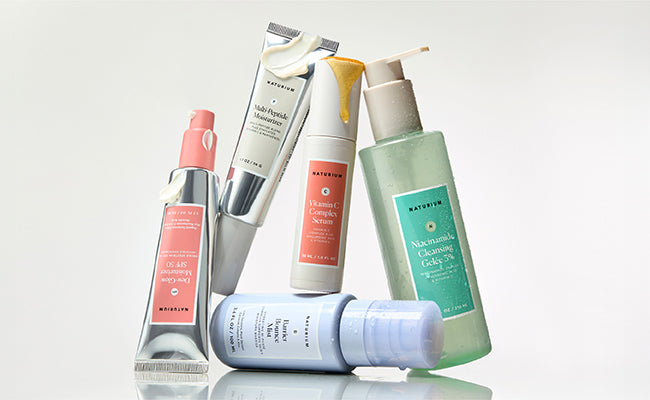
Naturium Vitamin C Complex Serum takes a multi-form approach, combining gold-stabilized L-ascorbic acid with sodium ascorbyl phosphate, a more stable form of vitamin C, plus Kakadu plum and a bioactive fruit blend. The Kakadu plum is an especially potent superfood native to Australia, packed with 50 times more vitamin C than oranges and other antioxidants. The formula helps brighten the look of skin, improve the appearance of uneven tone, and defend against environmental stressors for a more radiant-looking complexion.
Which Form of Vitamin C Is Best for Dull Skin?
Here’s where vitamin C gets a little more complicated: seeing “vitamin C” on two ingredient lists doesn’t mean the formulas are the same.
Vitamin C can be formulated in several forms, and stability and skin penetration are major formulation challenges. L-ascorbic acid is water-soluble and unstable, particularly when exposed to air. Researchers have therefore investigated derivatives and different delivery systems designed to improve stability and topical use.
So the best serum for dull skin isn’t necessarily the one with the biggest vitamin C number on the bottle. The form of vitamin C, overall formulation, stability, packaging, and how well your skin tolerates the product all matter. A lot.
L-Ascorbic Acid vs. Vitamin C Derivatives
L-ascorbic acid is pure vitamin C and the most biologically active and extensively studied form. The catch? It’s notoriously tricky to formulate because it is unstable and has difficulty penetrating the skin. Research has found that low-pH formulations can improve its stability and permeability, although acidic formulas may also be irritating for some skin.
Vitamin C derivatives modify the molecule in an effort to address some of those formulation challenges. A recent systematic review found meaningful differences in stability, tolerability, and clinical applications among the derivatives studied.
Naturium Vitamin C Complex Serum gives you both approaches. It combines gold-stabilized L-ascorbic acid with sodium ascorbyl phosphate (SAP), a vitamin C derivative.
That combination is also part of what makes the serum approachable for someone new to vitamin C. Wirecutter described sodium ascorbyl phosphate as milder than L-ascorbic acid and selected Naturium Vitamin C Complex Serum as a standout option for people trying vitamin C for the first time.
How to Use Vitamin C Serum in Your Skincare Routine for Dull Skin
Learning how to brighten dull skin with vitamin C doesn’t require rebuilding your skincare routine.
Keep it simple. Harvard Health recommends a common morning order: gentle cleanser, vitamin C serum, moisturizer, then sunscreen. And that final step matters. Vitamin C can complement your daytime antioxidant routine, but it does not replace broad-spectrum sunscreen.
When and How to Apply
A vitamin C serum morning routine makes particular sense because it allows you to pair an antioxidant serum with daily sunscreen.
After cleansing, apply your vitamin C serum to clean skin, then follow with moisturizer and broad-spectrum SPF. If you’re new to vitamin C or your skin tends to be sensitive, you don’t necessarily need to jump straight into daily application. Harvard Health suggests starting every other day and increasing to daily use if tolerated. If you experience substantial discomfort or irritation, stop using it and consult your physician.
Packaging matters, too. Vitamin C can be vulnerable to oxidation, which is why formulation and storage are important considerations. Unlike some leading brands that come in glass bottles with droppers that can easily let light and air in, Naturium Vitamin C Complex Serum comes in solid packaging with an airtight pump.
What to Pair With Vitamin C for Radiant Skin
Vitamin C doesn’t have to work alone. For radiance and hydration, pair it with ingredients that address other reasons skin can look dull.
For example, our team loves both niacinamide and hyaluronic acid as hydrating or barrier-supportive ingredients that layer well with vitamin C. Hyaluronic acid is an especially useful pairing when dehydration is contributing to a lackluster appearance. Niacinamide can complement a routine more focused on the appearance of uneven skin tone.
Again, vitamin C and niacinamide for dullness can coexist in the same routine. The longstanding idea that they inherently “cancel each other out” comes from chemistry that doesn’t reflect typical modern skincare conditions.
If your skin is sensitive, though, don’t turn your glow routine into an ingredient Olympics. Introduce new actives gradually and pay attention to how your skin responds.
Vitamin C vs. Other Brightening Ingredients
Vitamin C isn’t the only ingredient you’ll see in skin care products for dull skin. We already touched on niacinamide, but alpha arbutin and azelaic acid can also appear in routines focused on brighter, more even-looking skin.
Vitamin C vs. Niacinamide
Both vitamin C and niacinamide can fit into a routine for dullness and uneven-looking skin tone.
Niacinamide is a form of vitamin B3 commonly used in formulas targeting hydration and the appearance of uneven tone. Adding Vitamin C can boost antioxidants and help defend against environmental stressors while improving the appearance of dullness.
If your skin tolerates both, vitamin C and niacinamide can be used in the same overall routine.
Vitamin C vs. Alpha Arbutin
Vitamin C is a multitasking antioxidant with research spanning environmental oxidative stress, photoaging, and visible pigmentation. Alpha arbutin is used more specifically in cosmetic formulas targeting the appearance of discoloration and uneven tone.
If overall radiance and antioxidant support are priorities, vitamin C may make sense as the broader multitasker. If the appearance of uneven tone is your primary concern, you may also see alpha arbutin incorporated into targeted brightening formulas.
Vitamin C vs. Azelaic Acid
Vitamin C and azelaic acid can both appear in routines focused on brighter, more even-looking skin, but they have different research histories and uses.
Vitamin C is especially well known for antioxidant activity and visible brightening. Azelaic acid is also used for uneven pigmentation and has applications beyond dullness. Depending on the formula and your skin, the two can also exist within the same broader routine rather than requiring an either/or choice.
If your concern goes beyond dullness or uneven-looking tone, talk to a dermatologist about which ingredient is appropriate.
How Long Does It Take for Vitamin C to Brighten Dull Skin?
If you’re wondering how long for vitamin C to brighten skin, think weeks, not days.
Harvard Health notes that it may take up to three months of consistent topical vitamin C use to see noticeable improvement. Clinical studies summarized by Harvard have also found improvements in overall skin texture and appearance after consistent use over several months.
Our Vitamin C Complex Serum is clinically proven to improve the appearance of fine lines and wrinkles in just 4 weeks based on an 8-week clinical study on subjects, with representation across all skin types & self-perceived sensitive skin.
The exact timeline depends on the formula, your skin, how consistently you use it, and what’s contributing to your dullness in the first place. That’s why a vitamin C serum for glowing skin should be thought of as part of a consistent routine rather than an instant fix.
Take progress photos if you’re curious. Gradual changes in radiance and uneven skin tone can be surprisingly hard to notice when you see your face every day.
Frequently Asked Questions About Vitamin C for Dull Skin
Can vitamin C serum help dull skin?
Yes, topical vitamin C has research supporting improvements in aspects of skin appearance including tone and texture. Its antioxidant activity helps defend against free-radical damage from environmental stressors. A well-formulated vitamin C serum for dull skin can help reduce the look of dullness and support a more radiant-looking complexion with consistent use.
What does vitamin C serum do for skin?
Vitamin C is an antioxidant. In skincare, a vitamin C brightening serum can help defend against environmental stressors while helping improve the appearance of dullness, uneven skin tone, and texture. Research on topical vitamin C has also investigated photoprotection, pigmentation, and visible signs of skin aging, although results depend heavily on the formulation and clinical research on topical products remains limited.
Can I use vitamin C serum in a beginner’s skincare routine?
Absolutely. You don’t need an elaborate routine:
- Cleanse
- Vitamin C serum
- Moisturizer
- SPF
That’s it. If you’re new to vitamin C, consider starting every other day and working toward daily use as tolerated. Harvard Health recommends this gradual approach, particularly because mild tingling can occur with topical vitamin C.
Naturium Vitamin C Complex Serum is an especially approachable option. Wirecutter recommended it for first-time vitamin C users after testing dozens of formulas, and Forbes called its accessible price an easy entry point for anyone curious about adding vitamin C to their routine.
How often should I use vitamin C serum for dullness?
Vitamin C can be used daily if your skin tolerates it. If you’re a beginner or tend to be sensitive, start every other day and gradually increase frequency. Consistent use matters more than trying to use as much as possible as quickly as possible.
For a simple vitamin C serum morning routine, apply Naturium Vitamin C Complex Serum after cleansing, follow with moisturizer, and finish with broad-spectrum SPF. With consistency, your vitamin C serum for glowing skin can become one easy step toward skin that looks brighter, smoother, and more radiant.

Why is topical vitamin C important for skin health? By Neera Nathan, MD, MSHS, Contributor, and Payal Patel, MD, Contributor. Harvard Health Publishing. November 10, 2021. https://www.health.harvard.edu/blog/why-is-topical-vitamin-c-important-for-skin-health-202111102635
The best vitamin C serums of 2026. By Roberta Schroeder and Bridget March. Harper’s Bazaar UK. Updated May 6, 2026. https://www.harpersbazaar.com/uk/beauty/skincare/g70464708/best-vitamin-c-serums-2026/
The Best Vitamin C Serums. By Rory Evans. The New York Times Wirecutter. Updated August 12, 2026. https://www.nytimes.com/wirecutter/reviews/best-vitamin-c-serums/
Humphrey S, Manson Brown S, Cross SJ, Mehta R. Defining Skin Quality: Clinical Relevance, Terminology, and Assessment. Dermatol Surg. 2021 Jul 1;47(7):974-981. doi: 10.1097/DSS.0000000000003079. PMID: 34148998; PMCID: PMC8231670. https://pmc.ncbi.nlm.nih.gov/articles/PMC8231670/
Al-Niaimi F, Chiang NYZ. Topical Vitamin C and the Skin: Mechanisms of Action and Clinical Applications. J Clin Aesthet Dermatol. 2017 Jul;10(7):14-17. Epub 2017 Jul 1. PMID: 29104718; PMCID: PMC5605218. https://pmc.ncbi.nlm.nih.gov/articles/PMC5605218
Kakadu Plum. By Kakadu National Park. 2026 Parks Australia (Commonwealth of Australia). https://kakadu.gov.au/discover/nature/plants/kakadu-plum/
Nicholas P J Stamford BSc(Hons), MA, MMngt, PhD. Stability, transdermal penetration, and cutaneous effects of ascorbic acid and its derivatives. First published: 23 November 2012; Journal of Cosmetic Dermatology. https://onlinelibrary.wiley.com/doi/10.1111/jocd.12006
Boghosian T, Mendez H, Boghosian N, Sayegh M, Beer J, Tosti A. Clinical Applications of Vitamin C in Dermatology: A Systematic Review. J Clin Aesthet Dermatol. 2026 Jul;19(7):10-15. PMID: 42761976; PMCID: PMC13588479. https://pmc.ncbi.nlm.nih.gov/articles/PMC13588479
The Best Vitamin C Serums That Deliver Glowy Results. By Kim Peiffer and Molly Calhoun. Reviewed By Jane Sung, Deputy Editor. Forbes. July 23, 2026. https://www.forbes.com/sites/forbes-personal-shopper/article/best-vitamin-c-serum/
DISCLAIMER: Lab Journals are intended to help educate on specific ingredients and skin care topics. Our articles are written to be informative and informational.
Please note any Naturium products with referenced ingredients are formulated for Cosmetic Use Only and NOT intended as replacements for physician pharmaceutical product recommendations.


Leave a comment
This site is protected by hCaptcha and the hCaptcha Privacy Policy and Terms of Service apply.