




Peptide Skincare: Everything You Need to Know

If you've been paying attention to skincare trends, you've probably noticed peptides appearing on ingredient lists everywhere. From serums to moisturizers, these powerful molecules have become a cornerstone of modern anti-aging routines. But what exactly are peptides, and why has peptide skincare become so popular? Let's dive in.
What Are Peptides?
Peptides are short chains of amino acids that serve as building blocks for proteins in the skin. Think of them as messengers that communicate with your skin cells, instructing them to perform certain functions. When amino acids link together in specific sequences, they form peptides, and when peptides combine, they create proteins like collagen and elastin—the structural foundations that keep skin looking firm, smooth, and youthful.
In the context of skincare, peptides are typically laboratory-engineered versions of naturally occurring peptides in our skin. These synthetic peptides are designed to penetrate the skin barrier and signal your skin to ramp up its natural processes, particularly collagen production and wound healing.
As we age, our bodies naturally produce less collagen and elastin, leading to visible signs of aging like fine lines, wrinkles, and loss of skin firmness. This is where peptide skincare comes in. By applying topical peptides, you're essentially giving your skin a boost, encouraging it to behave more like younger skin.
How Do Peptides Work in Skincare?
The science behind peptides is fascinating. When collagen breaks down in the skin, it creates specific peptide fragments. Your skin recognizes these fragments as a signal that collagen has been damaged and needs to be replaced. Topical peptides can mimic these natural signals, essentially "tricking" your skin into thinking it needs to produce more collagen.
Different types of peptides work through various mechanisms. Some stimulate collagen production directly, while others inhibit enzymes that break down collagen. Some peptides improve skin elasticity by supporting elastin production, while others focus on reducing muscle contractions that lead to expression lines. This versatility makes peptides incredibly valuable in addressing multiple signs of aging simultaneously.
The beauty of peptides is that they're generally well-tolerated across all skin types. Unlike some potent anti-aging ingredients that can cause irritation or sensitivity, peptides work with your skin's natural processes rather than forcing dramatic changes. This makes them an excellent option for those with dry skin or sensitive complexions who still want anti-aging benefits.
Types of Peptides in Skincare
Not all peptides are created equal. Understanding the different types can help you choose the best peptide skincare products for your needs.
Signal Peptides
Signal peptides are perhaps the most well-known category. These peptides send messages to skin cells to increase collagen production, improve skin elasticity, and support elastin production. They essentially tell your skin to kick into repair mode, making them excellent for addressing signs of aging and improving skin tone.
Carrier Peptides
Carrier peptides deliver trace minerals like copper and magnesium to the skin. Copper peptides, in particular, have gained significant attention in the skincare world. These peptides don't just carry copper to your skin; they actively support wound healing, stimulate collagen production, and provide antioxidant benefits. The copper component is essential for various enzymatic processes involved in skin repair and regeneration.
Enzyme Inhibitor Peptides
Sometimes called neurotransmitter peptides, enzyme inhibitor peptides work by reducing muscle contractions that cause expression lines. The most famous example is Argireline, often marketed as a topical alternative to injectable treatments. By inhibiting neurotransmitters that trigger facial muscle contractions, these peptides can help soften the appearance of wrinkles caused by repeated facial expressions.
Antimicrobial Peptides
While less common in anti-aging products, antimicrobial peptides support the skin barrier and can help with wound healing. They naturally defend against harmful bacteria and promote a healthy skin microbiome.
Peptide Skincare Benefits
The benefits of incorporating peptides into your routine are numerous and well-documented in dermatological research.
Anti-Aging Effects
The primary draw of peptide skincare is its anti-aging potential. By stimulating collagen production and supporting the skin's natural repair processes, peptides can visibly reduce the appearance of fine lines and wrinkles. Regular use of a peptide serum can lead to improved skin texture, enhanced skin firmness, and a more youthful-looking complexion.
Improved Skin Barrier Function
A healthy skin barrier is essential for maintaining hydration and protecting against environmental stressors. Peptides support skin barrier integrity by promoting the production of structural proteins and lipids. This can be particularly beneficial for those with dry skin or compromised barrier function.
Enhanced Hydration
While peptides themselves aren't humectants like hyaluronic acid, many peptide products are formulated with complementary hydrating ingredients. The improved barrier function that peptides provide also helps skin retain moisture more effectively, leading to better hydration.
Firmer, More Elastic Skin
By supporting both collagen and elastin production, peptides help improve skin elasticity and firmness. This can result in skin that looks lifted and more toned, with improved resilience and bounce.
Better Skin Tone and Texture
Peptides contribute to skin health, which manifests as more even skin tone and smoother texture. By promoting cellular turnover and repair, peptides help create a more refined skin surface.
How to Use Peptide Skincare Products
Incorporating peptide skincare into your routine is straightforward, but there are some best practices to maximize results.
Choosing the Right Product
Peptide serums are typically the most concentrated form of peptide delivery and are applied after cleansing but before heavier creams. A peptide moisturizer can provide hydration and anti-aging benefits in one step, making it ideal for streamlining your routine. For those concerned about the delicate eye area, peptide eye creams offer targeted treatment where signs of aging often appear first.
Layering with Other Ingredients
One of the advantages of peptides is their compatibility with other skincare ingredients. Peptides pair beautifully with hyaluronic acid, which provides hydration while peptides work on structural concerns. They also work well alongside antioxidants like vitamin C and ferulic acid, which protect against free radical damage while peptides support repair and regeneration.
However, there's some debate about using peptides with certain exfoliating acids. While not necessarily incompatible, some evidence suggests that very low pH environments might affect peptide stability. If you use strong acids like AHAs or BHAs, consider applying them at different times of day from your peptides, or ensure your peptide product is formulated at an appropriate pH.
Building Your Peptide Skin Care Routine
For a comprehensive approach, consider this routine structure:
Morning:
-
Cleanser
-
Peptide serum
-
Antioxidant serum (if using)
-
Peptide moisturizer
-
SPF (non-negotiable!)
Evening:
-
Cleanser
-
Treatment products (retinol, acids, etc.)
-
Peptide serum
-
Peptide moisturizer or rich cream
-
Eye cream with peptides
Remember that consistency is key with peptides. Unlike some ingredients that show rapid results, peptides work by supporting your skin's natural processes, which takes time. Expect to use peptide products for at least 8-12 weeks before seeing significant improvements.
Best Peptide Skincare Products: What to Look For
Peptide Concentration and Type
Look for products that list specific peptides rather than just "peptides" on the ingredient list. Quality formulations will feature recognizable peptides like Matrixyl (palmitoyl pentapeptide-4), Argireline (acetyl hexapeptide-8), or copper peptides (copper tripeptide-1). Products containing multiple types of peptides can address various concerns simultaneously.
Complementary Ingredients
The best peptide skincare products combine peptides with other beneficial ingredients. Look for formulations that include:
-
Hyaluronic acid for hydration
-
Antioxidants like vitamin C or ferulic acid for protection
-
Nourishing ingredients like panthenol for skin barrier support
-
Collagen-supporting ingredients that work synergistically with peptides
Packaging and Stability
Peptides can be delicate molecules. Look for products in opaque, air-tight packaging that protects the formula from light and air exposure. Pump bottles are typically better than jars for maintaining peptide stability.
Experience the Power of Naturium's Multi-Peptide Collection
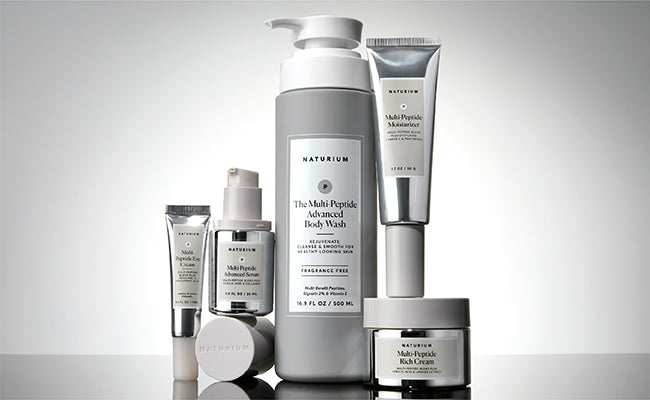
At Naturium, we've harnessed the science of peptides to create a collection that delivers visible results without the luxury price tag. Our Multi-Peptide line is formulated with advanced peptide blends designed to target multiple signs of aging simultaneously.
Multi-Peptide Advanced Serum
Our bestselling Multi-Peptide Advanced Serum ($25) is powered by an advanced multi-peptide blend, including encapsulated copper peptides and Argireline® Amplified peptide. This powerful peptide serum works to improve texture and reduce the appearance of fine lines and wrinkles. The encapsulation technology works to deliver these ingredients effectively to your skin. We've also included encapsulated ferulic acid and collagen to help firm skin's appearance and support a more youthful-looking complexion.
Multi-Peptide Moisturizer
Following your serum with our Multi-Peptide Moisturizer creates a powerful duo. This nutrient-dense peptide moisturizer features our multi-peptide blend along with encapsulated ethylated vitamin C and panthenol. The fast-absorbing, lightweight formula targets the look of fine lines and wrinkles while delivering essential hydration. It's perfect for those who want anti-aging benefits without a heavy feel.
Multi-Peptide Rich Cream
For those with dry skin or anyone seeking deeper hydration, our Multi-Peptide Rich Cream offers richer nourishment. This ultra-rich cream is formulated with an advanced multi-peptide blend to nourish, smooth, and firm skin's appearance. The luxurious texture makes it ideal for nighttime use or for drier seasons when your skin needs extra support.
Multi-Peptide Eye Cream
Don't forget the delicate eye area. Our silky and lightweight Multi-Peptide Eye Cream is specifically formulated with peptides, including Argireline® Amplified peptide, to help smooth and improve the look of fine lines and wrinkles for a refreshed-looking appearance.
The Complete Routine
For optimal results, incorporate the entire Multi-Peptide family into your routine. After cleansing, apply Multi-Peptide Advanced Serum to help firm, lift, and brighten skin. Follow with Multi-Peptide Moisturizer for lightweight hydration or Multi-Peptide Rich Cream for richer moisture and firming benefits. Finish with Multi-Peptide Eye Cream to hydrate and help smooth the eye area.
Ready to experience the transformative power of peptides? Explore Naturium's peptide collection and discover how advanced peptide technology can help you achieve radiant, youthful-looking skin. Your future skin will thank you.
Frequently Asked Questions
What do peptides do for skin?
Peptides are amino acid chains that signal skin cells to boost collagen production, reduce the appearance of fine lines and wrinkles, and improve skin firmness and elasticity. Different types work through various mechanisms. Some stimulate collagen, others relax facial muscles to minimize expression lines, and carrier peptides like copper peptides support wound healing.
Can I use peptide serums every day?
Yes, peptide serums are safe for daily use and consistency is key to seeing results. Most people apply a peptide serum twice daily—morning and night—after cleansing and before moisturizer.
What should you not mix with peptides?
Peptides are compatible with most ingredients, though some experts suggest separating them from strong acids (AHAs, BHAs) that might affect peptide stability. They work beautifully with hyaluronic acid, vitamin C, antioxidants, and retinol.


Leave a comment
This site is protected by hCaptcha and the hCaptcha Privacy Policy and Terms of Service apply.